
 Image 1 of 4
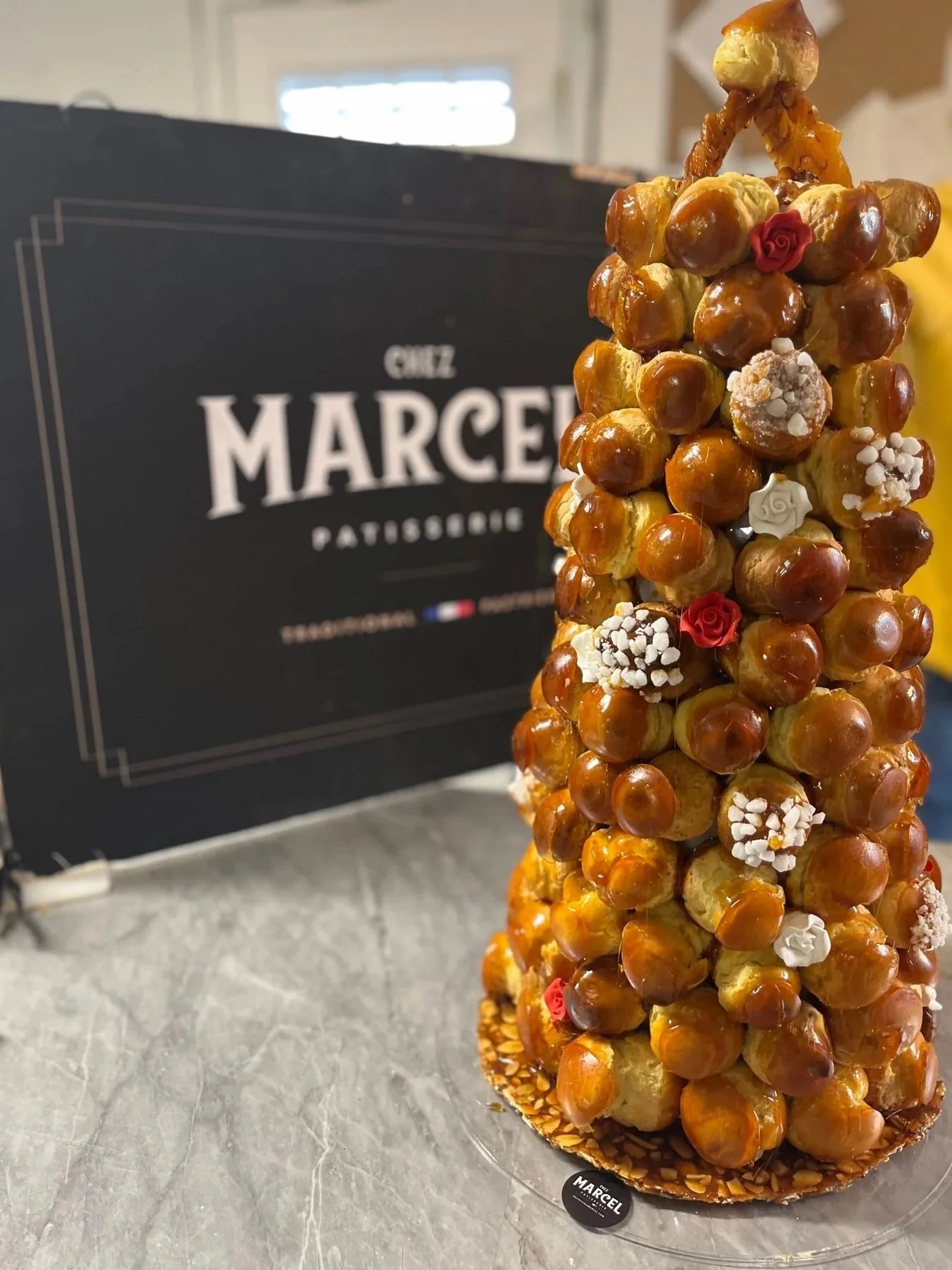 Image 2 of 4
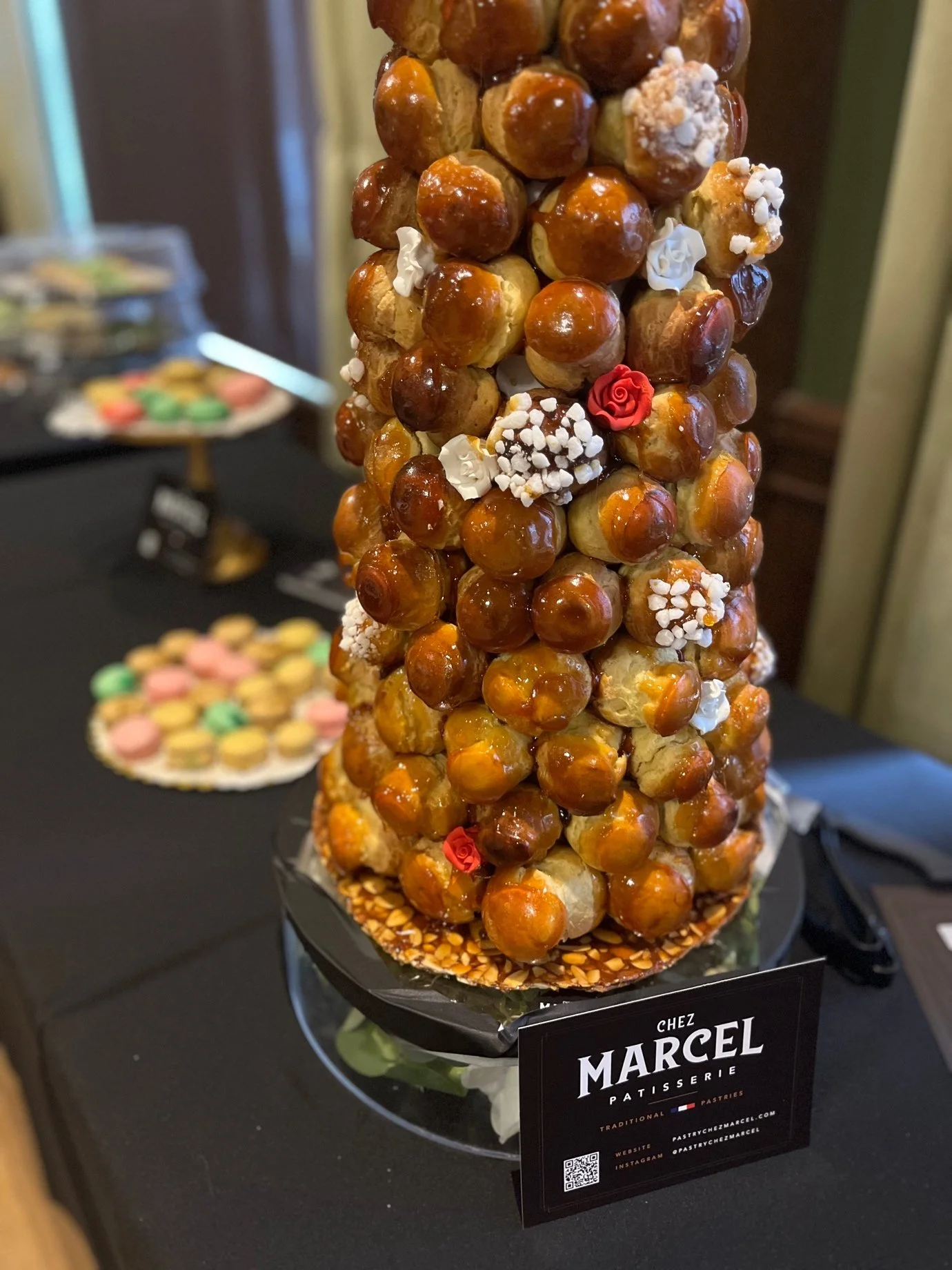 Image 3 of 4
 Image 4 of 4
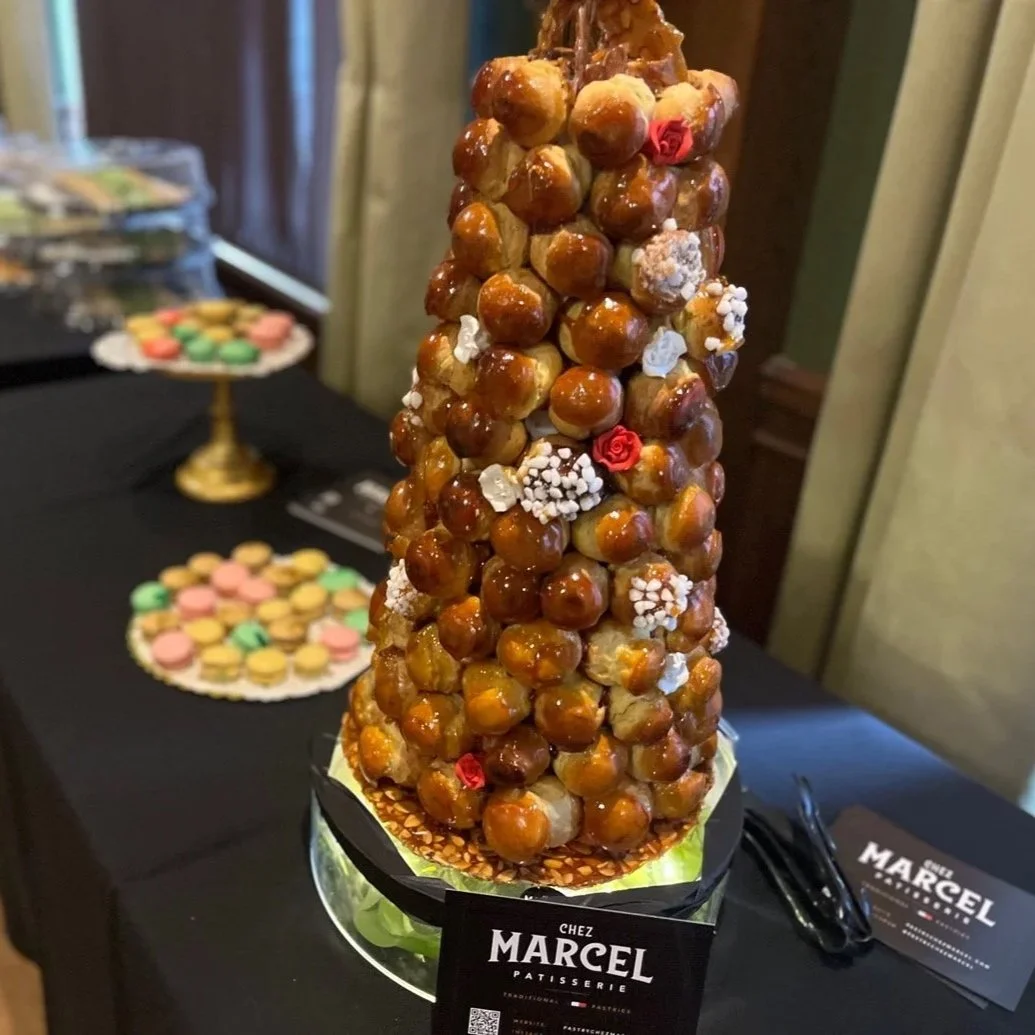
Appearing in 1806 in André Viard's cookbook, Le Cuisinier impérial, the Croquembouche, in its original spelling, was so named because of its texture in the mouth, as the magazine L'Éléphant reminds us. Initially, profiteroles (a French dessert made with choux pastry, vanilla ice cream, and chocolate) were the components of the croquembouche. They were then assembled with sugar, cooked to the last degree, or with caramel. Hence the famous crunch when eaten.
It was Alexandre Dumas who later defined it as a "montage" (a type of tiered cake) in his culinary dictionary in 1873. Having become an integral part of French gastronomy and pastry, it is known today as the “pièce montée” – a traditional wedding cake.
Variations
Please select cake size to coincide with the number of people at your event.
Appearing in 1806 in André Viard's cookbook, Le Cuisinier impérial, the Croquembouche, in its original spelling, was so named because of its texture in the mouth, as the magazine L'Éléphant reminds us. Initially, profiteroles (a French dessert made with choux pastry, vanilla ice cream, and chocolate) were the components of the croquembouche. They were then assembled with sugar, cooked to the last degree, or with caramel. Hence the famous crunch when eaten.
It was Alexandre Dumas who later defined it as a "montage" (a type of tiered cake) in his culinary dictionary in 1873. Having become an integral part of French gastronomy and pastry, it is known today as the “pièce montée” – a traditional wedding cake.
Variations
Please select cake size to coincide with the number of people at your event.